
The AI Competency Model
Every employee is somewhere on the path from beginner to advanced AI user. Our model makes that visible and measurable.
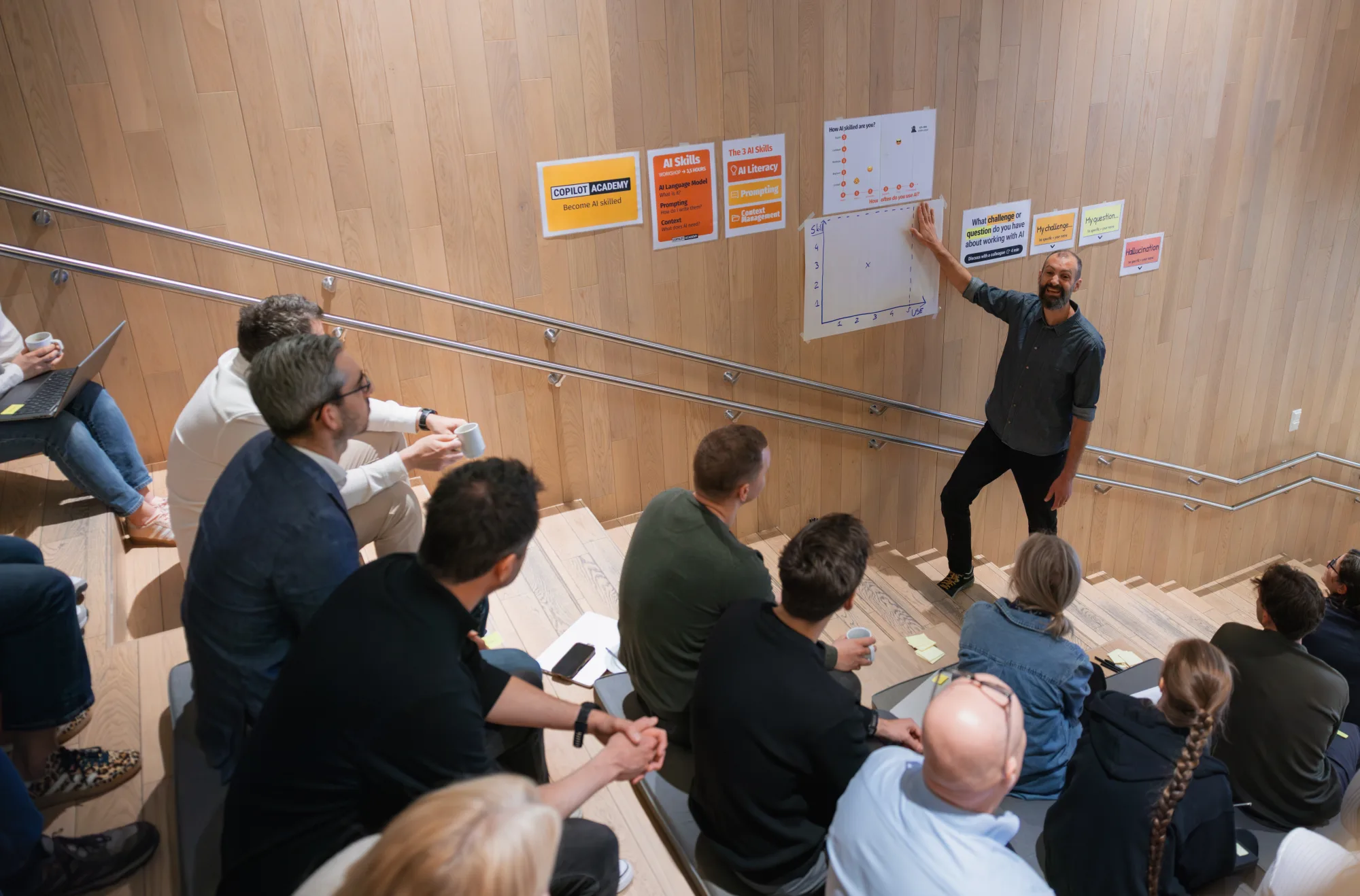
Observable behavior at each level
No vague scores. For each skill, we describe exactly what someone does at each level.
Checks AI output for errors and knows that answers can be convincing but incorrect.
Writes simple instructions and experiments with different phrasings.
Provides minimal context in prompts and notices that adding background information improves output.
Recognizes hallucinations and deliberately chooses which tasks are suitable for AI.
Deliberately applies task, context, role and format, and builds a library of proven prompts.
Organizes reference documents and feeds the model exactly the information it needs.
Predicts where AI fails and designs workflows with built-in verification.
Analyzes which prompt component is missing and builds reusable frameworks for the team.
Manages project-wide context across multiple conversations and consistently saves 40%+ time.
Developed based on 2,500+ participants at 150+ organizations.
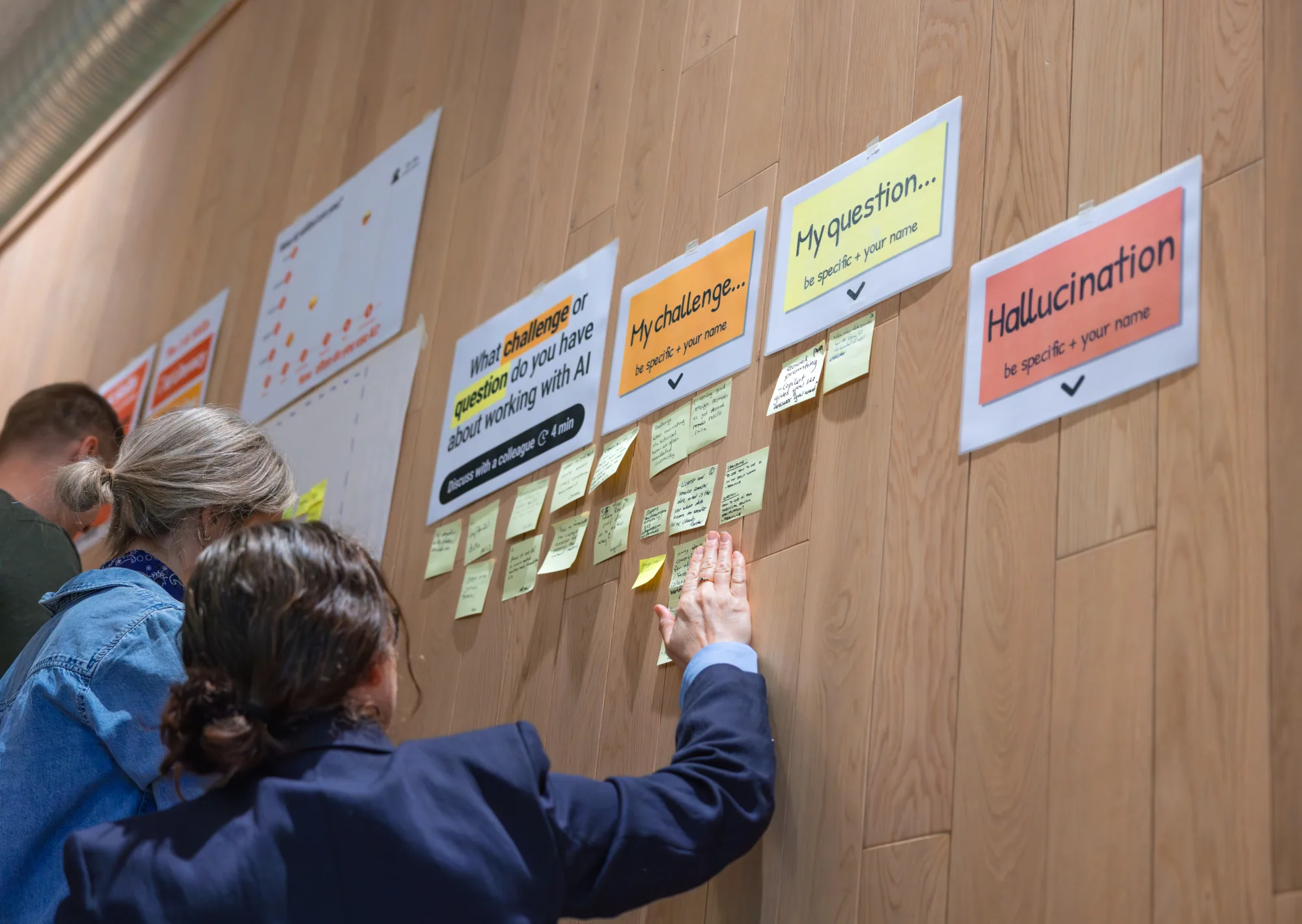
Three choices behind the model
Our model rests on three choices. AI proficiency isn't role-specific: anyone doing knowledge work needs the same core skills. Those skills have to keep up with the pace of new tooling, so we train behavior, not buttons. And we work with real examples from participants' own work, not invented cases.
Universal skills
The three core competencies (AI understanding, effective prompting, context management) apply to every knowledge worker. No separate course per role: the same foundation, applied to the work at hand.
Built to outlast new tooling
Copilot today, ChatGPT tomorrow, something else next quarter. People who master the underlying skills adapt easily. We train the behavior, not the interface.
Examples from real work
During training, participants work with their own documents, emails and files. What they learn is applicable from day one to the work already on their desk.
Frequently asked questions
What goes wrong when employees stay at beginner level?
They treat AI as a search engine: type a question, accept the first answer and paste it in without checking. Errors in reports, emails and analyses slip through unnoticed. The productivity gains AI promises get wiped out by rework.
Why isn't prompt training alone enough?
A good prompt without AI understanding leads to blind trust in the output. And without context management, you'll get generic answers every time that still need rewriting. The three skills reinforce each other: only when you train them together does AI become reliably useful.
How do I know if my team is making progress?
The competency model describes concrete, observable behavior at each level. After the course, you can see whether someone checks output (beginner), systematically builds prompts (proficient) or designs workflows with built-in verification (advanced).
Schedule an introduction
30 minutes, online. We'll discuss your situation and whether our approach fits. No sales pitch.
Schedule a conversation